
HC Fiber for Wadding and Padding: 32mm vs 64mm, 3D, 7D or 15D
Choosing HC fiber for wadding is mostly about two numbers: cut length and denier. Get them right and the web forms cleanly on the card, bonds well in the oven or under the needles, and keeps its loft in the finished quilt, sofa or mattress pad. Wuxi Southern Yangtze Textile Co., Ltd produces non-siliconized hollow conjugated fiber (HC) in 3D, 7D and 15D, usually cut at 32mm and 64mm. This guide explains how wadding and padding makers match these sizes to their process and end product. It is not another HC vs HCS comparison; it assumes you already want a dry, non-siliconized fiber.
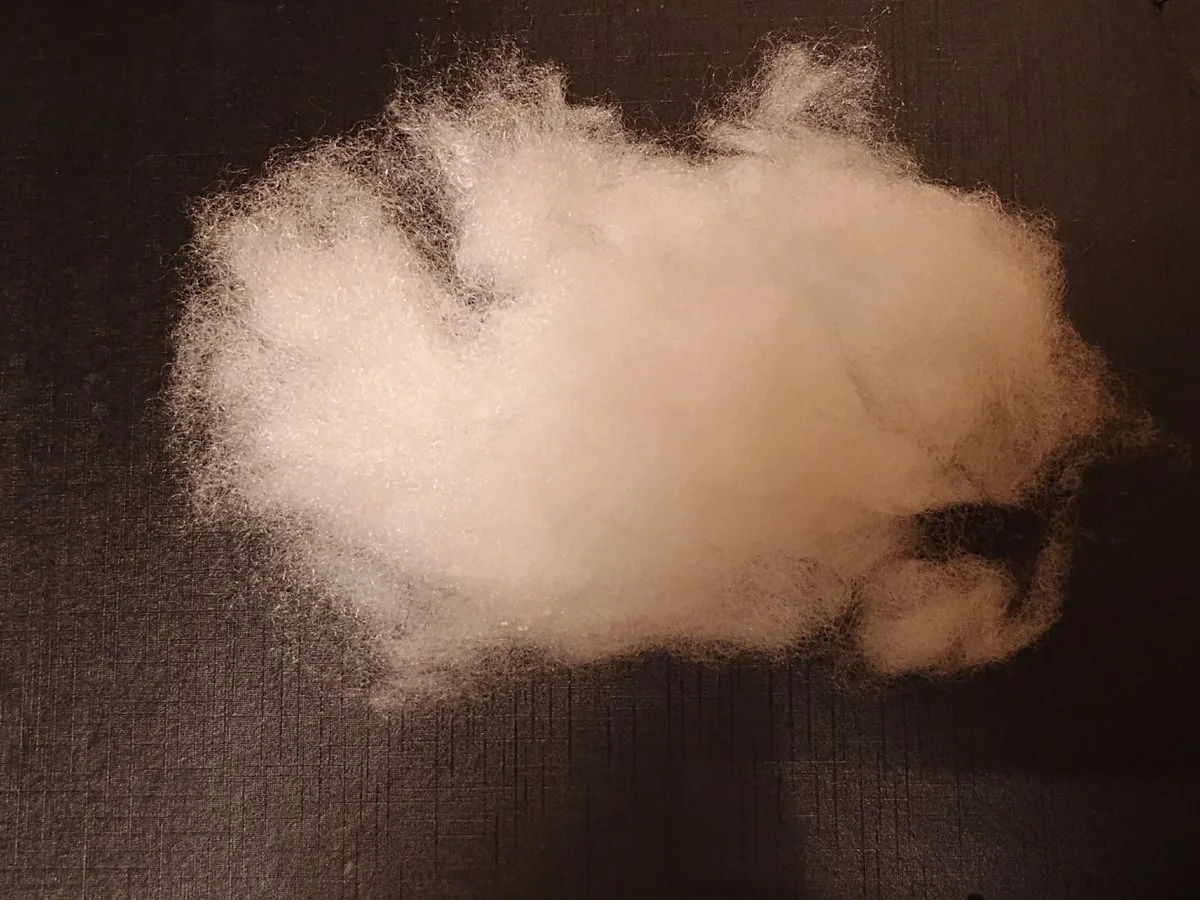
How to Choose HC Fiber for Wadding: Start With Your Process
The same HC fiber behaves differently on different lines, so begin with how your batt or web is made.
- Thermal-bonded wadding. HC is carded together with a low-melt binder fiber and passed through an oven. The dry fiber surface gives the melted binder something to hold, so the batt stays together when it is cut and sewn.
- Needle-punched padding and felts. Needles push fibers through the web to lock it. Fiber-to-fiber friction helps the mat hold together, which is one reason many needle-punch lines use non-siliconized fiber.
- Spray-bonded wadding. A resin binder is sprayed on the web. The fiber surface again needs to accept the binder rather than repel it.
- Loose stuffing and opening machines. Some factories also open HC and blow it straight into a product, usually where a firmer, less slippery fill is wanted.
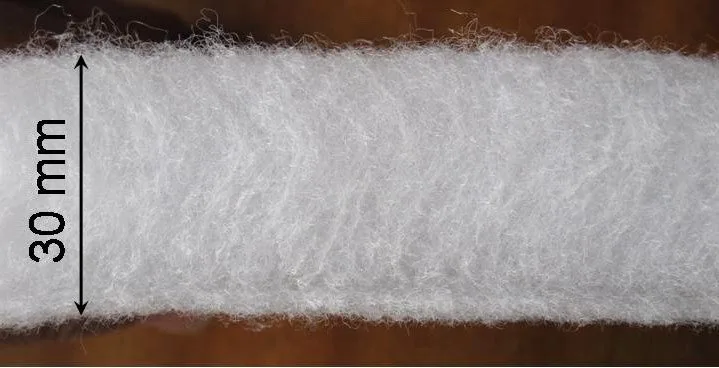
32mm vs 64mm: Which Cut Length?
Cut length should follow your machines first and your product second.
| Cut length | Typical equipment | Typical use |
|---|---|---|
| 64mm | Carding lines with cross-lapper, thermal-bond or needle-punch lines | Wadding rolls, quilt batting, sofa and mattress padding |
| 32mm | Opening and blowing machines, fiber filling machines, short-staple lines | Loose stuffing, cushion and toy fill, blends with shorter fibers |
As a general rule, longer fiber gives a carded web more cohesion, which helps when the web is lapped into thicker batts. Shorter fiber opens and flows more easily through filling equipment. The HC product page also lists 51mm for lines set up between the two. If you are not sure, tell us your carding or opening equipment and we will suggest a length for trial.
3D, 7D or 15D: Matching Denier to the End Product
Denier is the fiber's thickness. Finer fiber feels softer; coarser fiber gives more support and bounce.
| End use | Common starting point | Why |
|---|---|---|
| Wadding rolls for garments and light quilts | 3D or 7D x 64mm | Softer hand, drapes well in thin batts |
| Quilts and comforters (bonded batting) | 7D x 64mm | Balance of softness and loft |
| Sofa and upholstery padding | 7D or 15D x 64mm | More support under constant sitting |
| Mattress pads and toppers | 15D x 64mm, often blended with 7D | Firmer, recovers after pressure |
| Stuffed toys and firm cushions | 7D or 15D x 32mm | Opens easily on filling machines; firmer shape |
These are starting points, not fixed rules. Many padding makers blend two deniers, for example 7D for surface softness and 15D for core support, and adjust the ratio after a trial.
For soft, slippery loose fill such as pillows and plush toys, most factories still choose siliconized HCS. HC is the better fit when the fiber needs to grip, bond or hold a firmer shape.
What to Tell Your Fiber Supplier
To get a useful recommendation and sample, send:
- Your process: thermal-bond, needle-punch, spray-bond or loose filling
- Your machines: card width, cross-lapper, opening or filling equipment
- The end product and the hand or firmness you want
- Denier and cut length you use now, plus any binder or blend fiber
- Virgin or recycled grade, and your monthly quantity and destination port
Then run the sample on your own line and compare web formation, bonding and loft with your current fiber.
See our hollow conjugated non-silicon fiber (HC) page, the low melt staple fiber used as binder in bonded wadding, the solid 2D x 51mm PSF for thermal bonded wadding, and the full fiber for filling range. For finish selection, read our HC vs HCS buyer guide.
About Wuxi Southern Yangtze Textile Co., Ltd
Wuxi Southern Yangtze Textile Co., Ltd is a polyester staple fiber manufacturer in Jiangyin, Wuxi, with about 15 years of experience. Two fiber production lines cover 0.3D to 150D, including 3D, 7D and 15D hollow conjugated fiber, with an annual capacity of 30,000 tons.
FAQ
Q: Which cut length is best for thermal-bonded wadding?
A: Most carded thermal-bond lines run 64mm HC. 32mm is more common on opening and filling machines. Your card settings decide in the end, so confirm with a trial.
Q: Can I mix 7D and 15D HC fiber?
A: Yes. Blending deniers is common in sofa and mattress padding to combine a softer surface with firmer support. Adjust the ratio after testing on your line.
Q: Is HC fiber suitable for stuffed toys?
A: It can be used where a firmer fill is wanted. For a soft, slippery toy fill, siliconized HCS is usually preferred.
For a sample or a quotation, contact us by WhatsApp / Mobile: +86-18800588573, or email sales@syfiberyarn.com.
Photo credits: polyfill sample by KamillaŚ, CC BY 4.0; nonwoven batt by Elkagye, CC BY-SA 3.0 (Wikimedia Commons).